



Exploring the Mysteries of Black Holes
Black holes are among the most fascinating phenomena in the universe. They challenge our understanding of physics and the fabric of space-time. This article delves into what happens to objects that fall into these enigmatic cosmic entities.
The Event Horizon: Point of No Return
The event horizon marks the boundary around a black hole beyond which nothing can escape. Once an object crosses this threshold, it is inexorably drawn into the singularity, where the known laws of physics cease to function. Here’s what occurs:
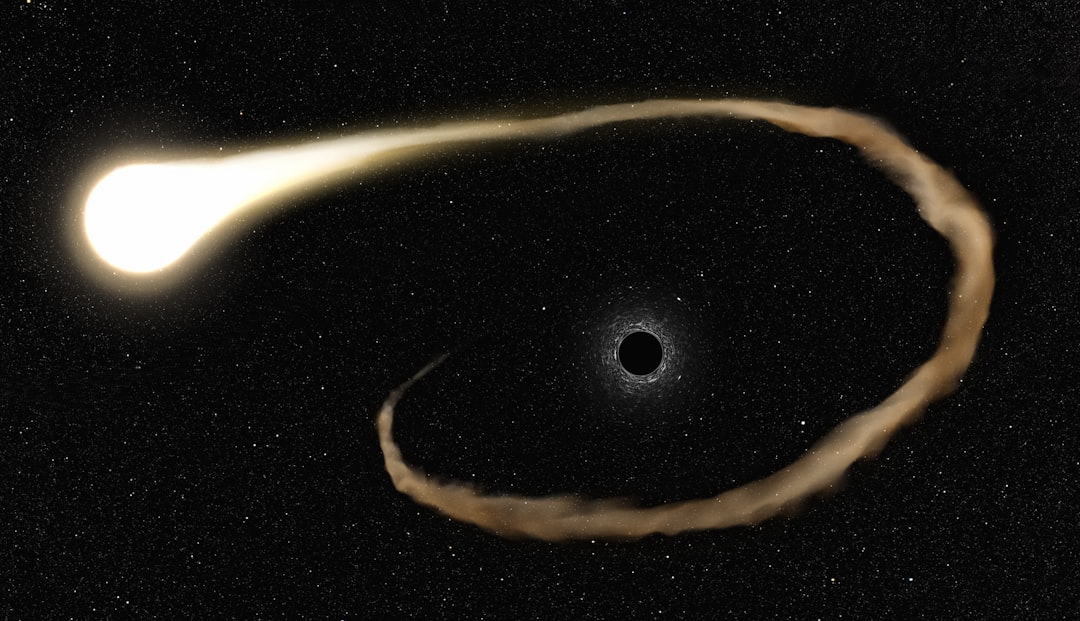
- Spaghettification: As an object approaches a black hole, it experiences intense gravitational forces that stretch it vertically and compress it horizontally, a process dubbed spaghettification.
- Time Dilation: For an external observer, time appears to slow down for the object falling into the black hole. As it nears the event horizon, its movement seems to freeze.
- Information Paradox: A renowned mystery in black hole physics is what happens to information about the object that falls in. Does it get lost forever, or can it be retrieved in some form?
Real-World Examples
While we cannot directly observe such events, astrophysicists study black hole mergers and the surrounding accretion disks using various wavelengths, enhancing our understanding of their effects on nearby matter.
Best Practices in Black Hole Research
- Engage with current astrophysical studies and literature to stay updated.
- Utilize advanced telescopes and instruments for better observational data.
- Collaborate with other scientists to analyze diverse data sets.
Understanding black holes enriches our pursuit of knowledge about the universe and our fundamental laws of physics.
